No One Else Remembers

Too many stars in the Interlochen winter sky, too bright, the sky so heavy with them, many were bound to fall.

David Lloyd WhitedJust small-town Northwesterners in someone else’s town, we ate deep-fried mushrooms in a log-cabin bar, watched the multitude of animated beer signs, chatted with the outlaw snowmobilers in leather and denim, who laughed at a friend’s latest drunken escapade, racing a snowmobile off the bank into the lake. An off-duty sheriff harrumphed, complained about having to go out in the cold all the time for fools.

“It’s just what happens here,” one guy shrugs, and breaks a rack at the pool table.

The next day on the road home, the ’42 Plymouth goes into multiple 360-degree spins on the icy highway.

“Sit on the floor,” you say, calm as we silently spin down the roadside.

Continue reading

Stage Fright: Your Sample & Your Back Cover Text

My blog post for Steyer Associates — Stage Fright Part II: Your Writing Sample — examines how a tech-comms manager reviews writing samples when hiring a tech-communications professional. I discuss solutions for common problems, like when your current work sample is still under non-disclosure agreement.

FacePunchI like to describe a parallel effort here on my blog for fiction writers, but the cases differ significantly:

  • Your writing sample online is the first 10% of your ebook on Amazon. 
    Tip: Did you move the front matter to the back of your fiction ebook, so that a significant portion of that 10% is not copyright, dedication, and table of contents?Your “sample” should start as close to “a name=start” as possible.
  • Your description / back cover text is what lures your reader.
    Did you write a Fourth Grade book report or a marketing enticement that will help you “close” a sale with browsing readers?Most writers I’m met hate writing the back-cover text. It calls for an entirely different view of the story than what you just spend hundreds of hours writing. I’ve struggled with this 250 words more than any other text  I’ve drafted, and don’t feel anything like a journeyman, must less an expert. Yet it’s not something that DIY writers can readily outsource.Here’s the most succinct guidance I’ve found, for staying on track in back-cover descriptions:

Continue reading

DIY Task List: Opera En Español

I’m a believer in task lists, and in breaking tasks lists into ever smaller parts—which is likely why my career as a technical writer took a turn into management. I’m working on a series of Managing Up posts for Steyer Associates about program management tasks for tech-comms professionals.

While that series develops, I’ll create some parallel entries here for fiction writing and publishing tasks for independent authors who publish their own work.

Opera_Logo-2014.C.160pxHere’s a modified task list for producing a book on the Opera En Español series that Jugum Press publishes. These are Spanish-language translations of opera librettos created by Dr. Eduardo Enrique Prado Alacalá. I keep this list to guide the tasks that must be complete when I’m publishing several librettos simultaneously.

First, for a long list of tasks, you need categories. Continue reading

Your Resume: Stage Fright Much?

NotGoingToStopStage Fright Part 1: Your Resume: My Steyer Associates blog post this month is about ensuring that a technical communicator’s resume serves as a writing sample.

The typical barrier to resume writing? Most people tend to get introspective, worrying about how to present everything they know. So here’s free advice for anyone who needs to maintain a professional resume:

Update your resume when you are not looking for a job.

You’ll have much better insight about your skills and your presentation of self when you aren’t under pressure.

When you’re writing your resume, try not to make it an existential crisis. It’s merely a recipe. If you’re too nervous, ask a writing professional to look at it — not for grammar and spelling, but as communication that describes the essentials of your professional self. Here’s the resume recipe: Continue reading

All the Kool Kidz Are Doing It

I’m preserving, and commenting on, my FB top 10 most influential books.

Also, that Mother Jones article ticked me off, for its inability to read and interpret data, and because of it’s another foray into the analysis-free attack on “adults who read YA.” Have any of these armchair social critics considered that people read YA because that’s where a lot of the best stories are right now?
OK, rant off, here are my top ten:

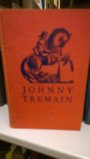
Johnny Tremain1. Johnny Tremain
In the 5th grade, I discovered bildungsroman. Someday, I will do a deep analysis on this book, bow down before the greatness of its author, and endeavor to learn even more from her as a writer.
Disney movie version: C
(The Kindle price is appropriate  for grade-school kid content.)

HaveSpacesuit2. Have Spacesuit Will Travel
In the 7th grade, our union school district combined 5 tiny grade schools, and put all 6-8 grades in the same building.
And created a library bigger than the 2 shelves each classroom had.
I found Robert Heinlein, and from there, YA science fiction.
So anything you like about him as a person, but these books opened the world to me in the 7th grade.
Movie Version: How is this not long ago a movie, but instead still languishing “in development”?
(The Kindle price is marginal [$6.99] and the used books are all collectors editions, so the pricing of this is a crime against junior-high aged kids, all around.) Continue reading

10-point Scale for Judgment Calls

In a recent discussion launched by Leta Blake, several of us discussed writers who complain in a simplistic way about “too much sex,” especially in Romance. Others on the thread asked for sensitivity about a reader’s (or writer’s) desire not to be judged for their preferences and desires to avoid stories that prove to be triggering or personally distasteful.

I’ve longed for a broader set of measures for books than 5 unranked stars. I have to read a lot of both positive and negative reviews — and the online sample — to guess the quality and author direction for the story. I most want that level of information when choosing a Mystery, because the AlsoBot and ‘Other Titles Like This One’ don’t meet my needs on most retail or review sites.

But today we were talking about sexual situation in Romance. So here’s the evaluation scale I wish I could find when choosing  a story, and that I apply as a writer while deciding what belongs in a particular story. (And I bet this won’t display well on a mobile device). Continue reading

ch-ch-ch-changes – dubstep version

My July post for Steyer Associates plays on the David Bowie song — so if I’m going to risk an DMCA takedown, I might as well double-up and use the same headlines.

“every time i thought i’d got it made”

My Managing Up tips for TechComms professionals this month tackles the challenges of organizational and technology changes:

For those of us who’ve been around for a while, we turn over every rock labeled “new,” wondering: “Have I seen one like this before?”

Check the post for my best ideas on how to cope when management shakes the dice at your workplace.

“you’ve left us up to our necks in it”

Nine Volt Heart - A Rain City Comedy of MannersTwo “Rain City Comedy of Manners” books:

Artemis in the Desert

Nine Volt Heart

The Grrrl of Limberlost .


Continue reading

Docs Ready for Tech Review?

Show MarkupPenny Orwick and I completed a series of posts for Steyer Associates on peer reviews for technical documentation.

A point we both made in our example peer reviews was that the original draft content wasn’t ready for review, much less for publication. To wrap up our series, Penny suggested a checklist.

Today’s Ready for Review? A Checklist provides the basics, plus some cautionary notes about what you risk losing if you send poor docs for tech review:

  • Discrediting yourself with your technical experts
  • Discrediting yourself with your peers

Typically I link to my tech-communications blog topic with a parallel for fiction writers. But it seems like there are a lot of models out there. So this time I’ll just link again to my Checklist for Writer/Editor Collaborations.

Other topics in our “peer review tips” collection:


“What If They Fire My Boss?”

AbideThis article is for my peers and comrades who are technical-communications professionals that work in vendor contracting agencies, rather than working as full-time employees of a technology company.

Here in Seattle right now, you can’t innocently browse the Web, glance at your Facebook feed, or check scores in the local newspaper without a fearsome speculation jumping out to grab you:

“Layoffs of up to 5,642 Reportedly Expected”
“With Merger, Local Layoffs Are Expected”
“Will Wall Street Still Love this Company When It Lays Off 20% of  Workforce?”

Then your mother or sister or best friend from college calls and asks, innocently, “Will you lose your job with all these layoffs?”

… that haven’t actually happened …

Those of us who choose to work as contract employees are always steeped in uncertainty:

What happens if this contract is cancelled?

Will this contract be renewed when it ends?

Have all contracting jobs dried up?

Let me share some manager’s experience about the issues that can affect contract works when the “permanent” supervisor’s position seems to be in jeopardy. Continue reading