Raining Green Ink

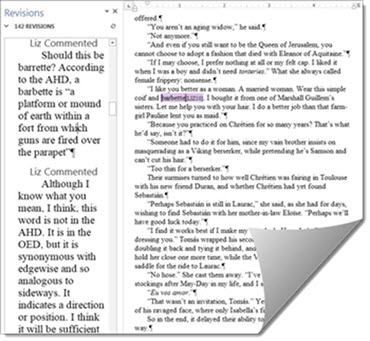
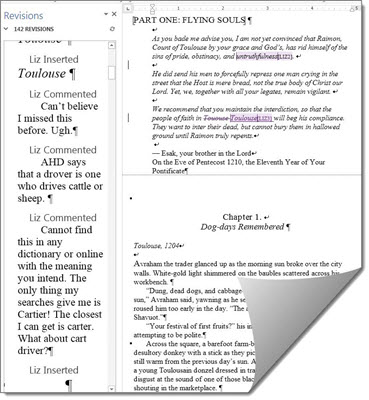
Richard BennettWestern Washington beat its old February – April rain record. Hunkering down inside to avoid the deluge, I’ve been providing reviews for other writers or begging beta reviews of my own draft fiction.

During this damp spring spent in fiction and nonfiction reviews and editing tasks, I repeatedly provided writers and reviewers with guidelines for how to review a manuscript. The tasks of a beta review for fiction or a peer reviewer for technical communications are different from an editor’s work.

1.
My April Managing Up column for Steyer Associates is live: Lions and Tigers and Peer Review—Oh No!

Lions and Tigers etc. offers tips for 3 basic kinds of peer reviews in technical communications:

  • Peer review as quality check
  • Skill building through peer critique
  • Mandated reviews as editorial replacement

As you might imagine, Continue reading

That Was the Week That Was #1

You Can Be an Artist!While I gather disparate info for my writing and personal life, the details don’t lead quickly to coherent sets of stories. So I’m going to try collecting and reporting bits in a Weekly Reader format, with Departments.

Reading with the Greatest Impact

Continue reading

Editor/Writer in Tech Comms: No fighting, No biting

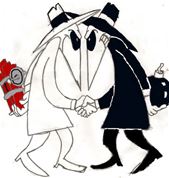
I have a new Managing Up post up for Steyer Associates that reflects on editor/writer relations in technical communications: Writer vs. Editor = Spy vs. Spy?

SpyvsSpyThis time, I’m emphasizing what a manager wants to see—and yes, I’m brutal:

  • Tech Writer: Your Job #1 is to please the Subject-Matter Experts who own the technology you’re writing about (or who own the business strategy) by preparing correct, clear content. Job #2 is to follow the style guide. If you’re worried about the editor marring your personal voice and style preferences, you aren’t doing your job.
  • Tech Editor: Your job is to drive the corporate voice, enforce consistency in terminology and presentation, complete the legal edits, and serve as first, best reader to ensure clarity.

Read on for my specific guidelines in relation to the basic rules of collaboration: no fighting, no biting.

…and if you missed it, earlier notes on fiction writer vs. editor relations:
Is that Blood on My Manuscript? Or Are You Just Happy to Ream Me?

We’re Both Professionals — What Can Possibly Go Wrong?

John Gardner said:

“Fiction does its work by creating a dream in reader’s mind.… One of the chief mistakes a writer can make is to allow…the reader’s mind to be distracted, even momentarily, from the fictional dream.”*

editornote2To achieve this goal through good editing of a fiction manuscript, two opposing kinds of intelligence drive the editor-writer relationship:

  • If you’re the writer, you are the dream-maker, seeking to impress your imagination on the reader, to keep the reader immersed in your lucid, fictive dream.
  • If you’re the editor, you serve as the ultimate reader, seeking to impose common rules of grammar, mechanics, and story structure to resolve any errors or distractions that might cause the reader to break from the dream.

No sane editor makes a claim of infallibility, but misaligned goals and differing professional experiences can result in problems in the editor-writer relationship.

Here are some cases where, beyond simple human error, you and your editor might get crosswise: Continue reading

Is that Blood on My Manuscript? Or Are You Just Happy to Ream Me?

editornotesShortly after Leta Blake posted her plea—Authors, Tell Me How Much Editing Hurts—I was walking on a long empty beach with a friend who spent the last thirty years as a literary editor, parallel to my thirty years in technical communications.

On our walk, with the Pacific Ocean crashing at our feet, we discussed how to help new writers get the most out of the writer/editor engagement. I’m sharing here our mutual thoughts about “first edit” experience for fiction writers preparing a manuscript for publication.

What Your Editor Does—and Why It Might Hurt

Continue reading

Guest Post: Chunk It Up!

A long-time technology partner had interesting comments about my Steyer post, Procrastinating … or PreplanningWith her permission, I’m including her thoughts here:

There’s a #2a under Guilt associated with over-preparing. That is, when procrastination occurs in Stage 2 of a project. I see it all the time. The researcher continues to collect more data when that level of data may not be necessary for that stage of the project. How to get to the “so what?” Chunking it up helps.

Scope before you’ve used up your runway!

I’m reminded of a time when a dear friend departed. I volunteered to make the video for the service. My request of the widower was to provide about 100 pictures or so, and I’d put it together. I stopped by to pick up the thumbdrive a week before the service, and found the entire house had stacks of pictures on every surface available. Thousands of pictures. Maybe 10’s of thousands. Her problem was making the decision on what to include. So she hadn’t made a single decision. She just kept pulling out more pictures to add to the consideration set.

We needed to chunk it up a bit. Continue reading

Preplanning? Si! Procrastinating? No!

My post for tech-communications professionals is up today at Steyer Associates web site: Procrastinating … or Preplanning?

I propose in that piece that for professional communicators, most “procrastination” is your brain begging for more preplanning time… though that begs the question:

How is “preplanning” different from regular old planning?

If You Want to WriteIt’s a question of being ready to commit.
I’ve long posited that for any tech-writing project, there’s probably 25 solutions, and you want to concentrate only on the best 3 — then pick one and commit to action.

However, that’s not always so straightforward, whether for tech-writing, fiction, or other projects. Brenda Ueland, in If You Want to Write, presents critical ideas in her chapter, “The Imagination Works Slowly and Quietly.”

Following the “slow imagination” concept, preplanning is: Continue reading

Up on Blocks

Here’s a quote from Philip Pullman (of His Dark Materials) that PVG posted on the Passive Voice blog today:

All writing is difficult. The most you can hope for is a day when it goes reasonably easily. Plumbers don’t get plumber’s block, and doctors don’t get doctor’s block; why should writers be the only profession that gives a special name to the difficulty of working, and then expects sympathy for it?

Up on Blocks  - CanyonChasersIn the community discussion, many writers disagreed with Pullman’s, but I buy it. I’ve been “blocked” in other, non-writing professional work—when I don’t know the answers and have to wait for the creative solution to come. And I’ve done enough complex remodels that I know plumbers and carpenters have to be creative…and it some times takes a while to find the answer.

Over 30 years of professional writing, I’ve asserted that what people call “writer’s block” is God’s way of keeping down the level of crap that gets out into the world. Writing might slow down, and require a few walks around the neighborhood, but if I’m facing anything that’s called a block, I ask myself these questions: Continue reading