DIY Task List: Opera En Español

I’m a believer in task lists, and in breaking tasks lists into ever smaller parts—which is likely why my career as a technical writer took a turn into management. I’m working on a series of Managing Up posts for Steyer Associates about program management tasks for tech-comms professionals.

While that series develops, I’ll create some parallel entries here for fiction writing and publishing tasks for independent authors who publish their own work.

Opera_Logo-2014.C.160pxHere’s a modified task list for producing a book on the Opera En Español series that Jugum Press publishes. These are Spanish-language translations of opera librettos created by Dr. Eduardo Enrique Prado Alacalá. I keep this list to guide the tasks that must be complete when I’m publishing several librettos simultaneously.

First, for a long list of tasks, you need categories. Continue reading

Your Resume: Stage Fright Much?

NotGoingToStopStage Fright Part 1: Your Resume: My Steyer Associates blog post this month is about ensuring that a technical communicator’s resume serves as a writing sample.

The typical barrier to resume writing? Most people tend to get introspective, worrying about how to present everything they know. So here’s free advice for anyone who needs to maintain a professional resume:

Update your resume when you are not looking for a job.

You’ll have much better insight about your skills and your presentation of self when you aren’t under pressure.

When you’re writing your resume, try not to make it an existential crisis. It’s merely a recipe. If you’re too nervous, ask a writing professional to look at it — not for grammar and spelling, but as communication that describes the essentials of your professional self. Here’s the resume recipe: Continue reading

All the Kool Kidz Are Doing It

I’m preserving, and commenting on, my FB top 10 most influential books.

Also, that Mother Jones article ticked me off, for its inability to read and interpret data, and because of it’s another foray into the analysis-free attack on “adults who read YA.” Have any of these armchair social critics considered that people read YA because that’s where a lot of the best stories are right now?
OK, rant off, here are my top ten:

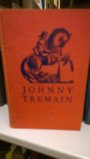
Johnny Tremain1. Johnny Tremain
In the 5th grade, I discovered bildungsroman. Someday, I will do a deep analysis on this book, bow down before the greatness of its author, and endeavor to learn even more from her as a writer.
Disney movie version: C
(The Kindle price is appropriate  for grade-school kid content.)

HaveSpacesuit2. Have Spacesuit Will Travel
In the 7th grade, our union school district combined 5 tiny grade schools, and put all 6-8 grades in the same building.
And created a library bigger than the 2 shelves each classroom had.
I found Robert Heinlein, and from there, YA science fiction.
So anything you like about him as a person, but these books opened the world to me in the 7th grade.
Movie Version: How is this not long ago a movie, but instead still languishing “in development”?
(The Kindle price is marginal [$6.99] and the used books are all collectors editions, so the pricing of this is a crime against junior-high aged kids, all around.) Continue reading

10-point Scale for Judgment Calls

In a recent discussion launched by Leta Blake, several of us discussed writers who complain in a simplistic way about “too much sex,” especially in Romance. Others on the thread asked for sensitivity about a reader’s (or writer’s) desire not to be judged for their preferences and desires to avoid stories that prove to be triggering or personally distasteful.

I’ve longed for a broader set of measures for books than 5 unranked stars. I have to read a lot of both positive and negative reviews — and the online sample — to guess the quality and author direction for the story. I most want that level of information when choosing a Mystery, because the AlsoBot and ‘Other Titles Like This One’ don’t meet my needs on most retail or review sites.

But today we were talking about sexual situation in Romance. So here’s the evaluation scale I wish I could find when choosing  a story, and that I apply as a writer while deciding what belongs in a particular story. (And I bet this won’t display well on a mobile device). Continue reading

ch-ch-ch-changes – dubstep version

My July post for Steyer Associates plays on the David Bowie song — so if I’m going to risk an DMCA takedown, I might as well double-up and use the same headlines.

“every time i thought i’d got it made”

My Managing Up tips for TechComms professionals this month tackles the challenges of organizational and technology changes:

For those of us who’ve been around for a while, we turn over every rock labeled “new,” wondering: “Have I seen one like this before?”

Check the post for my best ideas on how to cope when management shakes the dice at your workplace.

“you’ve left us up to our necks in it”

Nine Volt Heart - A Rain City Comedy of MannersTwo “Rain City Comedy of Manners” books:

Artemis in the Desert

Nine Volt Heart

The Grrrl of Limberlost .


Continue reading

That Was the Week We Wish Wasn’t: Random Edition

When the pitchfork waving crowd corners the fu This past week has been entirely too eventful.

  • A  close friend in ICU, recovering too slowly.
  • Rewriting the same 10K-word chapter 8 days in a row.
  • A robber chased by an angry crowd crashes through the fence 16 feet above my backyard. He’s trapped in my courtyard, so we flee. Which means a whole police crew came to clear my house of a possible invader … just like on TV!

Oh, let’s relax with a peek at my text and phone message feed for the week. Continue reading

You Get What You Measure: Technical Communications Edition

You Get What You MeasureMy Managing Up post for Steyer Associates this month — You Get What You Measure — touches on the difficulty with most metrics for productivity and quality in technical writing. I offer ideas for how to create personal measures to increase your satisfaction as a writer, editor, or other working in the content publishing chain.

Making progress on quality goals, working toward expertise—I believe these are fundamentals for personal ambition.
Sure feels like metrics for corporate tech-comms consistently undermines those personal metrics these days, doesn’t it?

What can we do, oh noble content providers, but go forth and meet our daily word count?
My related post on metrics and productivity in fiction writing is here.

Artemis in the Desert

Artemis in the Desert - A Rain City Comedy of MannersNew motorcycle fiction, now live from your favorite book vendors.
And thanks again to Lisa Tilton for great cover art, and for indulging my whimsy on the back cover of the print book.

In the Notes and Acknowledgments at the back of Artemis in the Desert, I include this disclaimer:

The highways and most towns in Artemis in the Desert are real. Once upon a time, real people on real motorcycles followed this route and endured extraordinary, unseasonal weather and bad coffee. However, those real people were practical and suffered no similar degree of human angst in their travels. The characters and activities in this story are wholly fictional and do not represent real events or real people, living or dead.

A long time ago, I did indeed ride the same highways and experienced the same weather as described in this new Rain City story. When I returned home, I transcribed details about the journey: distances, bad coffee, hail, and highlights from Stephen R. Whitney’s Field Guide to the Grand Canyon. A year later, I revisited the Four Corners during a month’s journey camping in the desert. The experience on that adventure amplified a story that I’d begun to imagine while freezing and pounded by hail while riding a BMW R100RT (the true Spandau ballet).

While on that first interminably wet journey, I read Jane Austen’s Persuasion for the first time. (I was late to Austen and Regency fiction in general.) With fork lightning circling the empty desert highways we rode, I imagined a story of two individuals from opposite worlds who are forced to meet again a decade later. These characters have revisited my imagination repeatedly since that journey.

Artemis in the Desert springs from the weather events of that original journey, and revisits the conceit that Jane Austen introduced: how can two people who were once intimate overcome all the misunderstandings and cultural barriers that once separated them?
… while drowning in unseasonal rains on back-country highways?

Artemis in the Desert


You Get What You Measure: Fiction Edition

In grade school, I was the youngest and smallest in the class and always chosen last for any team sports. The boys groaned when the even-odd count resulted in me on their team.
You Get What You Measure, Fiction Writers!On the other hand, for the 7,583 times we were forced to play prison ball in the guise of physical education, I was the last person standing on my team more than fifty percent of the time. I was nimble, so the bell rang before anyone managed to cream me with the ball.

How did I achieve this? The boys’ goal was to win the game by smashing the ball into people as hard as they could. Most often they picked off the girls first, but forgot about me till the end. My goal? Never touch the ball and never let it touch me. I had no other concept of “winning.”

When I worked as a technical writer on product software, we had specific measures for productivity and quality, plus an external schedule, milestones, and job-related incentives for innovation and creativity. It’s a world in which it’s relatively easy to track success as a writer.

Now that I work full-time as a fiction writer and publisher of non-fiction, I need different markers for success in my writing. For me, daily word count is not an adequate measure of productivity.  However, I was also formerly a manager known for creative definition of realistic measures for productivity and success. So I’ve been thinking about how to understand my own productivity as a fiction writer without focusing only on word count and number of publications per quarter. I’m sharing some of those ideas here for other fiction writers, especially those who don’t write fiction full time as their principal income.

Continue reading